
Why a Water Leak Can Go Unnoticed
Everything may look normal at home, but your plumbing could tell a different story. A water leak can develop inside walls or beneath flooring without affecting how faucets and drains operate. Furthermore, aging pipes may…
Everything may look normal at home, but your plumbing could tell a different story. A water leak can develop inside walls or beneath flooring without affecting how faucets and drains operate. Furthermore, aging pipes may deteriorate gradually, creating openings that allow water to escape unnoticed. Over time, this may cause moisture damage in areas that homeowners rarely inspect. The problem often becomes noticeable only when stains, unusual odors, or changes in water usage appear. However, these signs may indicate that water has already reached surrounding materials. Read further to understand why these problems remain hidden and how to recognize them before they worsen.
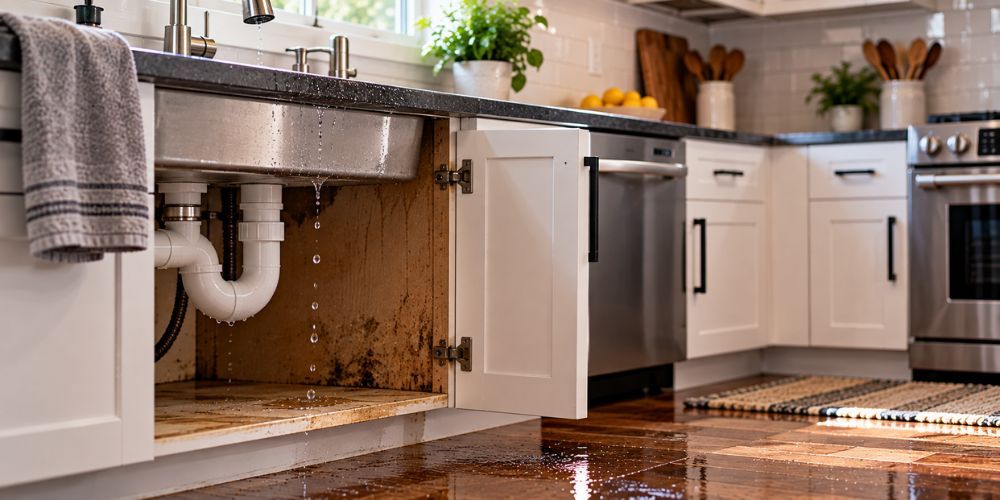
Why Small Leaks Escape Attention
A water leak does not always cause puddles or interrupt household water use. Small openings in plumbing connections can release water at a rate that homeowners rarely notice. In some cases, the amount of escaping water changes throughout the day, making the problem difficult to identify. Several factors explain why minor leaks escape attention, such as:
- Minor pipe cracks: Small fractures release only a limited amount of water, making the loss difficult to notice without monitoring consumption.
- Loose fittings: Connections around valves and joints may allow water to escape in small droplets rather than a continuous stream.
- Stable water pressure: A minor water leak may not reduce pressure enough to affect faucets, showers, or appliances.
- Intermittent leakage: Some connections leak only when fixtures operate, appliances draw water, or pressure fluctuates.
Because these conditions produce few immediate disruptions, homeowners may continue their routines without suspecting a plumbing problem.
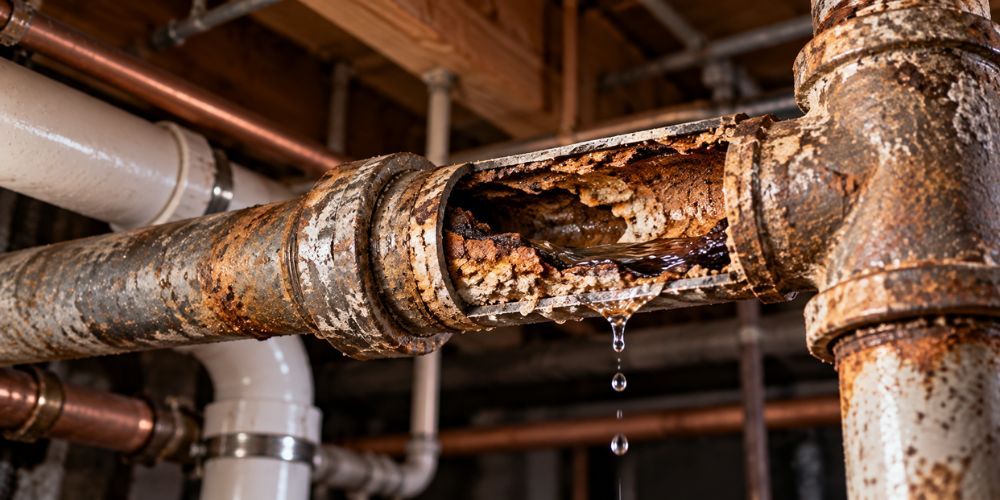
Aging Pipes Conceal Hidden Problems
Plumbing materials gradually deteriorate over the years due to water exposure, pressure fluctuations, and regular use. However, aging pipes may develop weaknesses that homeowners cannot easily identify through routine observation. Several conditions make deterioration difficult to recognize, including:
- Internal corrosion: Corrosion gradually reduces pipe wall thickness, increasing the risk of pinhole leaks in susceptible metal pipes.
- Weakened pipe walls: Repeated pressure fluctuations and material deterioration can contribute to fractures in vulnerable sections.
- Deteriorating joints: Aging seals and connections may lose their ability to maintain a watertight seal.
- Pipes inside walls: Enclosed plumbing prevents homeowners from examining connections and pipe surfaces without accessing wall cavities.
- Underground and overhead pipes: Plumbing beneath floors or above ceilings limits direct access to areas where deterioration may occur.
Since most residential plumbing is out of sight, homeowners cannot always assess its condition visually. A professional evaluation can help identify deterioration before a hidden water leak causes further problems.
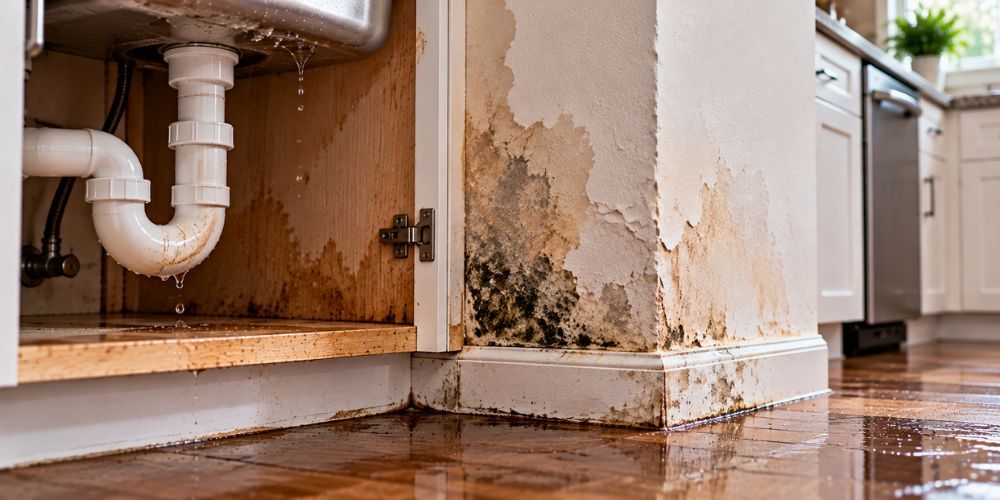
How Moisture Damage Develops Slowly
A concealed water leak can affect surrounding building materials long before it disrupts household activities. Different materials absorb, retain, or react to moisture in ways that allow deterioration to progress over time. The following situations explain how moisture damage develops:
- Drywall absorption: Gypsum panels absorb water through their porous structure, which can compromise the material and diminish its strength.
- Wood moisture retention: Prolonged dampness can cause wooden framing and subfloors to expand, increasing the risk of decay when conditions persist.
- Insulation saturation: Certain insulation materials retain water, slowing evaporation and extending moisture exposure around enclosed structures.
- Adhesive deterioration: Moisture can weaken adhesives beneath flooring and other finishes, reducing their ability to bond materials.
- Mold development: Persistent dampness can support mold growth on susceptible materials when moisture and environmental conditions allow.
The extent of deterioration depends on the amount of water, the duration of exposure, and the materials affected. Addressing the source early helps limit moisture damage and reduces the risk of extensive repairs.
Warning Signs Homeowners Often Miss
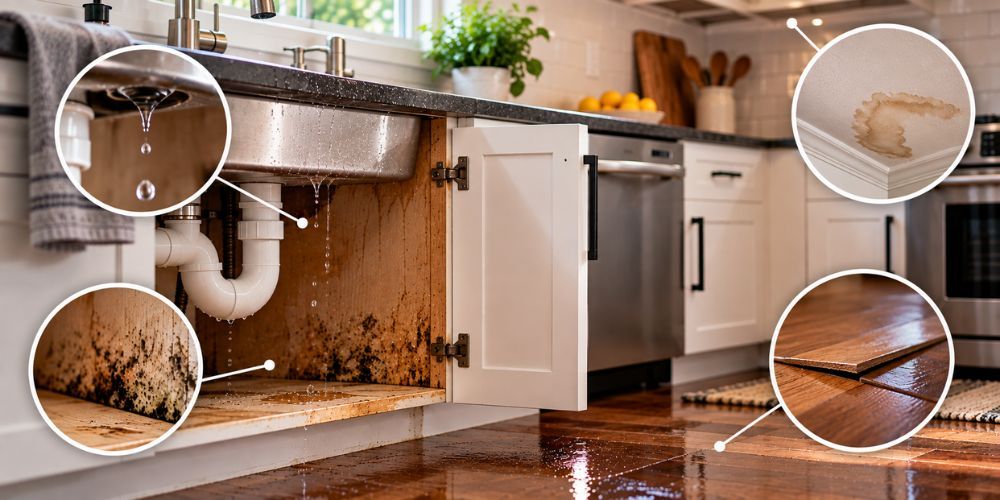
Hidden plumbing problems can produce household changes that seem unrelated to water loss. Although these signs may appear minor, recognizing unusual patterns can help homeowners identify a possible water leak. The following warning signs deserve attention:
- Unexpected water bills: Higher consumption without changes in household routines may indicate water escaping from the plumbing system.
- Musty odors: Persistent smells around cabinets, walls, or enclosed spaces can indicate damp conditions that require investigation.
- Unusual dripping sounds: Dripping or trickling noises when fixtures are not running may suggest water escaping from a supply line.
- Pressure fluctuations: Unexpected changes in faucet or shower pressure can indicate plumbing problems, although other factors may also cause them.
- Surface irregularities: Peeling paint, discolored walls, warped flooring, and damp patches that never fully dry may indicate moisture damage beneath exposed surfaces.
Not every warning sign confirms a water leak. However, tracking when these changes occur and where they appear can help homeowners determine whether further inspection is necessary.
Finding Leaks Before They Spread
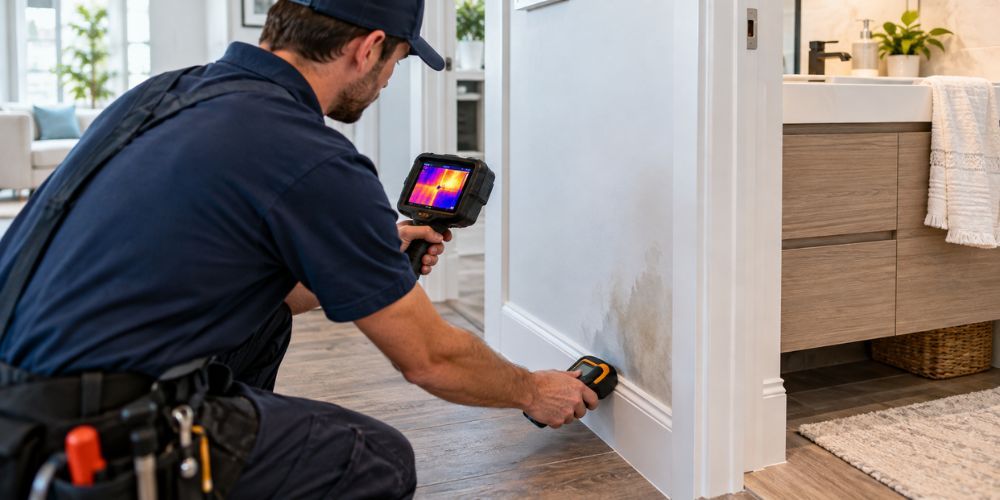
Early plumbing checks can help homeowners recognize unusual water loss and prevent minor problems from becoming more extensive. While basic inspections can reveal accessible issues, concealed plumbing often requires specialized assessment. The following methods can help identify a suspected water leak:
- Water meter monitoring: Turn off water-using fixtures and appliances, then observe whether the meter continues registering consumption.
- Connection inspections: Examine exposed supply lines, shutoff valves, and fittings for droplets, corrosion, or other signs of leakage.
- Fixture checks: Inspect areas beneath sinks, behind toilets, and around water heaters to identify problems near plumbing connections.
- Pressure testing: Plumbing professionals can evaluate supply-line pressure to help determine whether the system leaks.
- Moisture measurements: Experts can use moisture meters and other inspection equipment to pinpoint concealed problem areas without unnecessary demolition.
For properties with aging pipes, professionals can also assess the extent of deterioration and recommend suitable repairs. Promptly identifying a water leak helps reduce water loss, limit moisture damage, and prevent further plumbing complications.
Don’t Let Leaks Linger
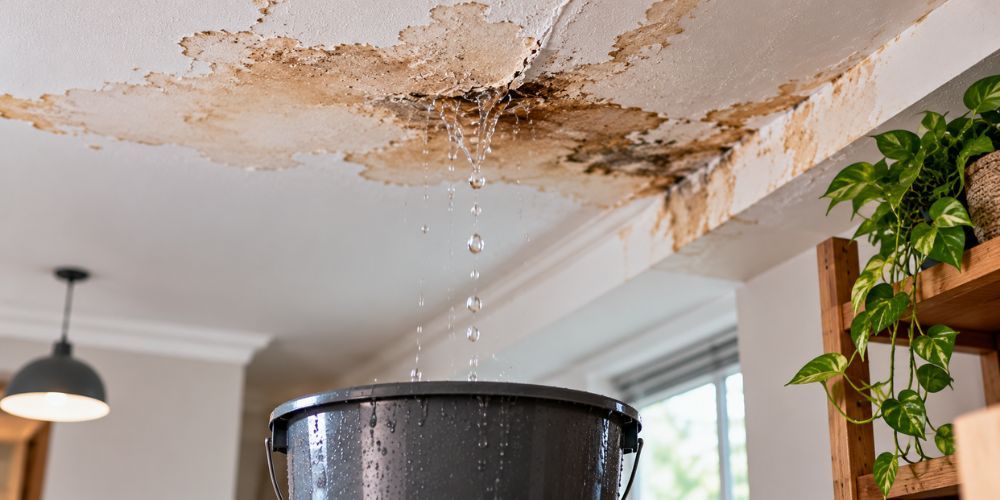
Small changes around the home deserve attention, especially when they point to a plumbing problem. What seems like ordinary wear may signal a water leak that requires professional assessment. Rather than waiting for visible damage, homeowners can take action by monitoring unusual water use, checking for persistent dampness, and addressing concerns about aging pipes. Early intervention can help limit moisture damage, protect surrounding materials, and reduce the need for extensive repairs. For reliable water leak repair in Midfield, AL, reach out to a skilled plumber to identify the source and resolve the problem before it worsens.
References:
- What is Mold? | US EPA. (2026, September 8). Retrieved from https://www.epa.gov/mold/what-mold
- How to Check for Leaks. (n.d.). Retrieved from https://www.portland.gov/water/water-efficiency-programs/find-leak